Solid vs. Engineered Hardwood Flooring: Which Is Right for Your Kalamazoo Home?
Choosing the right residential wood flooring starts with understanding what separates solid from engineered hardwood. For homeowners in Kalamazoo, MI, that choice carries extra weight. The area's wide humidity swings, cold winters, and moisture challenges in below-grade spaces make product selection especially important for long-term performance.
What Makes Solid and Engineered Hardwood Different?
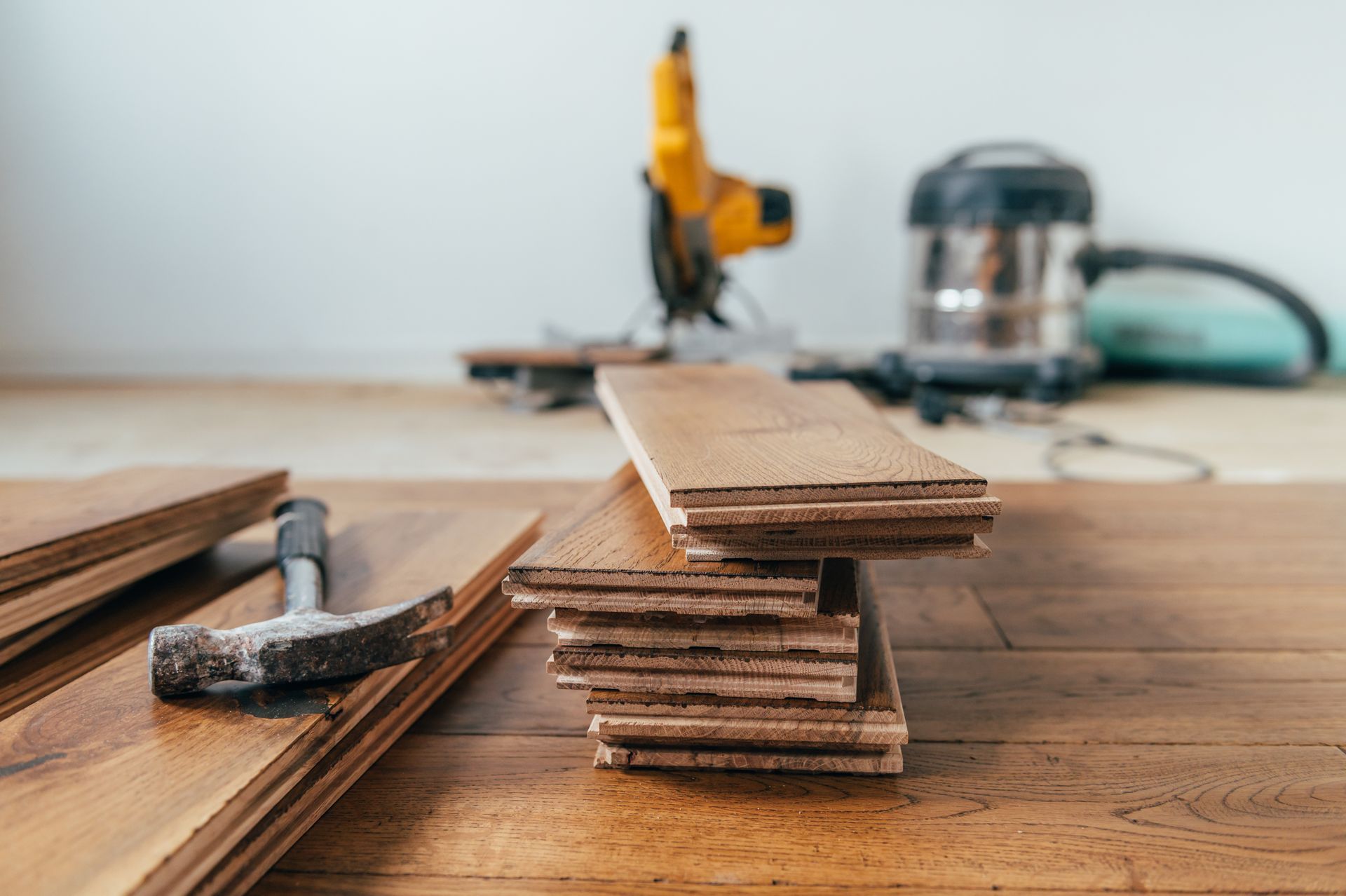
Solid hardwood is milled from a single piece of wood through its entire thickness. Engineered hardwood is built from multiple layers stacked in opposite directions, topped with a real wood veneer.
That cross-layered core gives engineered hardwood its key advantage: dimensional stability. When humidity rises in summer or drops in winter, engineered boards resist the movement that solid planks are prone to. This matters in Southwest Michigan, where seasonal indoor humidity can swing significantly throughout the year.
How Kalamazoo's Climate Affects Your Choice
During summer, indoor humidity can cause solid hardwood boards to expand and press against each other. In January, furnace-heated air dries the interior and those same boards can shrink, leaving visible gaps. This seasonal cycle is manageable with consistent humidity control, but it is a real factor in this region.
Engineered hardwood handles these swings more gracefully, making it a popular choice where humidity management may be inconsistent.
Finished basements and slab-on-grade construction present an additional challenge. Solid hardwood is not recommended for below-grade installation due to ground moisture. Engineered hardwood can be installed on, above, or below grade, giving homeowners in neighborhoods like Vine or near Asylum Lake Preserve more flexibility.
Radiant heat is worth weighing as well. Solid hardwood can be sensitive to consistent warmth from below, while many engineered products are specifically rated for use over radiant heat systems.
Solid Hardwood: Key Considerations for Kalamazoo Homes
Solid hardwood offers timeless appeal and can be sanded and refinished multiple times, making it a long-term investment for upper-level and main-floor spaces. Key points for this area:
- Performs best in above-grade installations with stable subfloor conditions.
- Requires indoor humidity kept between 35 and 55 percent year-round.
- Can be refinished repeatedly, extending its usable life by decades.
- May show seasonal gapping in dry Michigan winters without a humidifier.
- Not suitable for basement or slab installations.
Engineered Hardwood: Key Considerations for Kalamazoo Homes
Engineered hardwood delivers authentic wood beauty with added structural resilience. The real wood wear layer looks and feels identical to solid hardwood underfoot.
- Handles humidity fluctuations better, making it well-suited for Michigan's seasonal swings.
- Can be installed on all grade levels, including basements and over concrete slabs.
- Typically compatible with radiant heat systems; confirm manufacturer guidelines.
- Wear layer thickness determines how many refinishing cycles are possible.
- Offers a wide range of species and finishes comparable to solid hardwood.
Best Picks for Kalamazoo-Area Homes
For main-floor living rooms, dining rooms, and bedrooms, both solid and engineered residential wood flooring can perform well when installed by a professional who accounts for local conditions. For basements or any space where moisture is a concern, engineered hardwood is typically the stronger choice.
Wood species also play a role. Denser options like white oak and hickory tend to be more dimensionally stable than softer species, making them a practical pick for Michigan homes regardless of which product type you choose.
To explore available species and product lines, visit the wood flooring options page.
What Is the Difference Between Solid and Engineered Hardwood?
Solid hardwood is cut from a single piece of wood, while engineered hardwood is made from multiple layers with a real wood veneer on top. Engineered hardwood offers better resistance to humidity changes and can be installed below grade.
Can Engineered Hardwood Be Refinished Like Solid Hardwood?
Yes, though the number of times depends on wear layer thickness. Thicker wear layers allow more refinishing cycles, similar to solid hardwood.
Is Solid or Engineered Hardwood Better for Michigan Basements?
Engineered hardwood is generally the better choice due to its resistance to moisture and suitability for below-grade installation. Solid hardwood is not typically recommended for basement use.
How Do I Control Humidity to Protect My Wood Floors in Kalamazoo?
Running a humidifier in dry winter months and a dehumidifier in humid summers helps keep indoor levels stable. Consistent humidity management protects both solid and engineered residential wood flooring from seasonal movement.
Ready to Find the Right Floor for Your Home?
The right residential wood flooring depends on where it is going, how your home handles humidity, and how you plan to use the space. Both solid and engineered options can deliver lasting beauty in Kalamazoo homes when matched to the local environment by an experienced installer.
Greg Nichols Wood Flooring Inc. has been serving Southwest Michigan families since 1978. The team is family-owned, fully insured, and experienced with the climate challenges Kalamazoo homeowners face every season.
Call
(800) 308-7246 to request a free consultation, or
contact the team online to discuss your project and schedule a visit.